Have you ever wondered why cats are often portrayed sipping a bowl of milk in cartoons and movies? This image, engraved in our minds, often prompts us to believe that milk is a staple in a cat’s diet. But the truth may surprise you. This article is going to delve into the complex relationship between cats and milk, answer the question if cats can indeed drink milk, and suggest some alternatives.
Cats and lactose: a complex relationship
Let’s start with a mini science lesson. Milk and other dairy products contain a sugar called lactose . Humans, and some animals, break down this sugar using an enzyme in our bodies known as lactase . Once broken down, it’s easily absorbed and digested.
Here’s where the cat-milk puzzle begins. Cats, although they enjoy the taste of milk, have bodies that don’t produce a lot of this helpful enzyme , lactase. This is particularly true for adult cats. As kittens, cats produce sufficient lactase to digest their mother’s milk. This is in fact, true for human infants too. However, as they mature, their lactase production decreases. When a cat that lacks lactase drinks milk, the undigested lactose passes through their system, often fermenting in the intestines. This can lead to a host of discomforting symptoms such as bloating, diarrhea, gas, and sometimes vomiting. It’s not a pleasant experience for our feline friends.
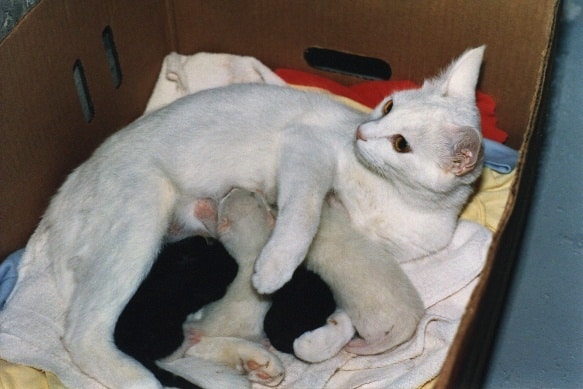
Kitten feeding, Credit: Wikimedia/Julianortega
Can cats really drink milk?
The short answer to this question is yes, cats can drink milk. However, the more important question is should they? For kittens, mother’s milk is vital. It provides all the necessary nutrients they need to grow. However, once weaned, kittens, like their adult counterparts, start producing less lactase.
Some adult cats can tolerate a small amount of milk without experiencing digestive distress , but others are more sensitive. Cats that are sensitive to lactose might experience digestive discomfort even with a small amount of milk. For these cats, milk should not be a part of their diet. It is important to note that each cat is unique. Some cats might be able to tolerate milk better than others, but it’s best to be cautious when introducing milk into your cat’s diet. Always start with a small amount and observe your cat for any signs of discomfort.
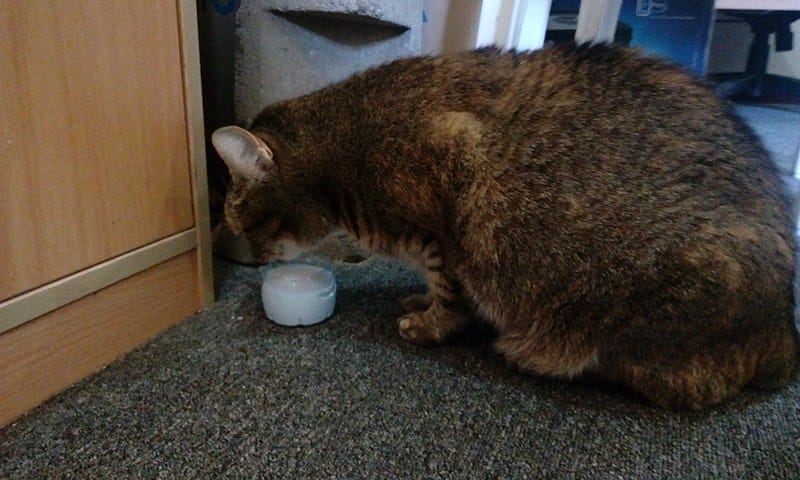
A cat drinking milk, Credit: Wikimedia/Kengee8
Alternatives to cow’s milk for cats
Just because regular cow’s milk might not be ideal for your cat doesn’t mean there are no alternatives. There are products known as ‘cat milk’ available on the market. Cat milk is a specially designed milk-replacement beverage that’s lactose-free, making it a much safer option for cats. It’s formulated to contain the right balance of vitamins and minerals, and because there’s no lactose, it’s easier for cats to digest.
But nothing beats water when it comes to hydrating your cat. Water is, without a doubt, the best liquid for them. A well-hydrated cat is a healthy cat. Remember, cats also get a lot of their water from the food they eat, especially if they consume a diet of wet or canned food, which is high in moisture.
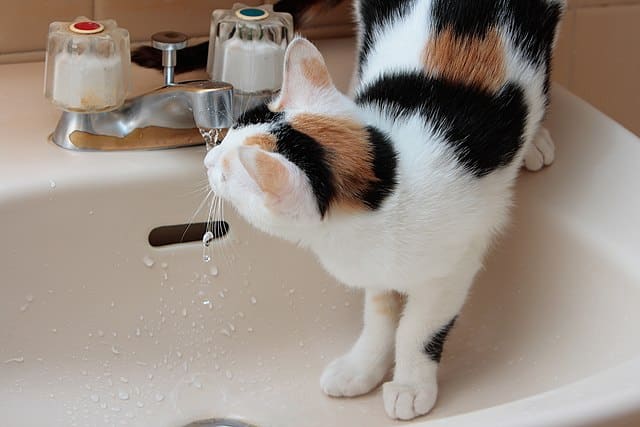
Cat drinking water, Credit: Wikimedia/MiNe
Conclusion
Cats can drink milk, but it isn’t always the best superfood for them, and in some cases, it can lead to unwanted digestive problems. The traditional image of a cat happily lapping milk from a saucer may be imbued in popular culture, but it’s not a model for good cat health.
If you wish to treat your cat, consider alternatives like specially formulated cat milk, or better yet, make sure they always have access to fresh water. Always remember that your cat’s dietary needs are unique and best understood by a vet. So, when in doubt, always consult a professional.
We must question and challenge what we see in popular media and seek scientific and expert advice to ensure we’re providing the best care for our beloved pets. Let’s aim to debunk myths and share knowledge for the health and well-being of all cats.
Glossary
Lactose: A type of sugar found in milk and other dairy products.
Enzyme: A protein that acts as a catalyst to bring about specific biochemical reactions.
Lactase: An enzyme that breaks down lactose into simpler sugars for absorption in the digestive system.
Ferment: The process by which cells break down molecules to generate energy.
Digestive Distress: Discomfort in the gastrointestinal tract, often involving bloating, gas, and diarrhea.