If the likes of King Kong and Godzilla interest you, you might find the behemoths of the natural world quite excellent. Although not as many animals get as large as they have in prehistoric eras, many still boast a formidable size. Usually, larger animals require more resources to survive, an obvious drawback to being a giant. How do the Goliaths of the modern world deal with that? Let’s find out while we look at 10 of the largest animals in the world.
Blue Whale
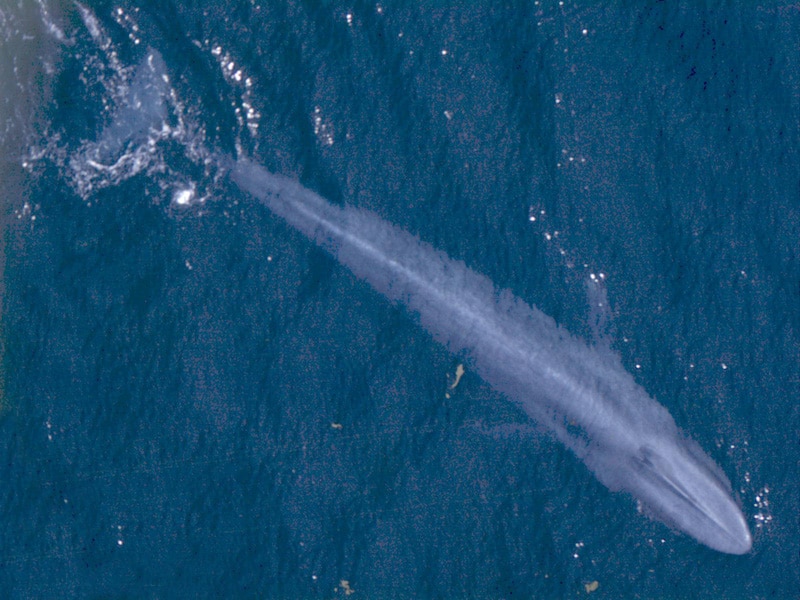
Physical Characteristics: The blue whale is the largest animal on Earth, reaching lengths of up to 100 feet (30 meters) and weighing as much as 200 tons. Their heart alone weighs as much as a car, and their tongues are heavier than most elephants.
Unique Adaptations: Blue whales are filter feeders, using baleen plates in their mouths to trap tons of tiny shrimp-like animals called krill. They possess a throat only as large as a fist, but it allows their mouths to expand massively, engulfing large quantities of water during feeding. The water is then filtered out, leaving behind the krill for consumption. Blue whales eat as much as four tonnes of krill per day.
Interactions with the Environment: Blue whales are found in all the world’s oceans, and often undertake long migrations in search of food. They play a crucial role in maintaining the balance of marine ecosystems by consuming vast amounts of krill, and their waste supports other marine life, like phytoplankton, by supplying them with iron and nitrogen.
With a tongue heavier than an elephant and a heart as big as a piano , the blue whale tops the list as the largest animal on the surface of the Earth.With a tongue heavier than an elephant and a heart as big as a piano , the blue whale tops the list as the largest animal on the surface of the Earth. Credits: Wikimedia/NOAA Fisheries
African Elephant
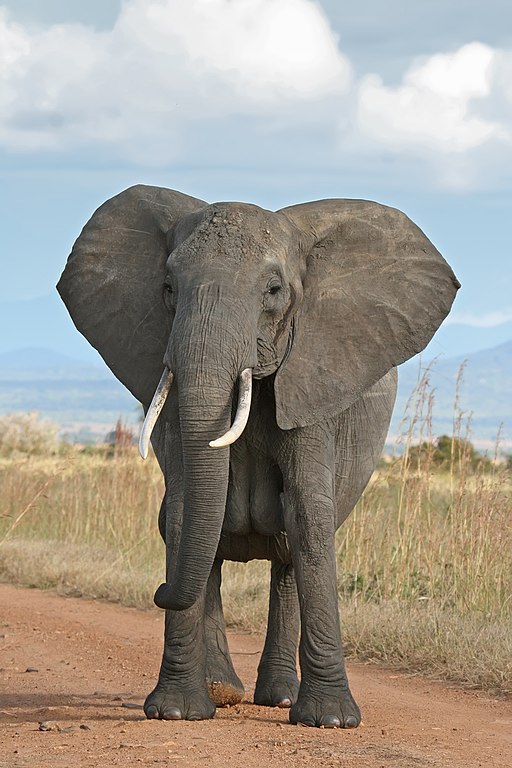
Physical Characteristics: The African elephant is the largest terrestrial animal, with males reaching heights of 10 to 13 feet (3 to 4 meters) at the shoulder and weighing up to 12,000 pounds (5,400 kilograms). They are characterized by their long trunks and large, fan-like ears.
Unique Adaptations: Elephants have exceptional memory and cognitive abilities. Their trunks, a fusion of the nose and upper lip, are incredibly versatile, used for breathing, drinking, and grasping objects. Their tusks are elongated incisor teeth made of ivory and are used for various tasks, including digging for water and defending against predators. However, these majestic animals have been targeted by poachers over the years because of their magnificent ivory tusks.
Interactions with the Environment: African elephants are keystone species, meaning they significantly influence their environment. They play a vital role in seed dispersal, creating forest clearings, and shaping landscapes. They are also essential for maintaining biodiversity in savannas and woodlands. Although seemingly docile, African elephants kill around 500 humans every year.
The largest animal on land is none other than the African elephant. Credits: Wikimedia/Muhammad Mahdi Karim
Giraffe
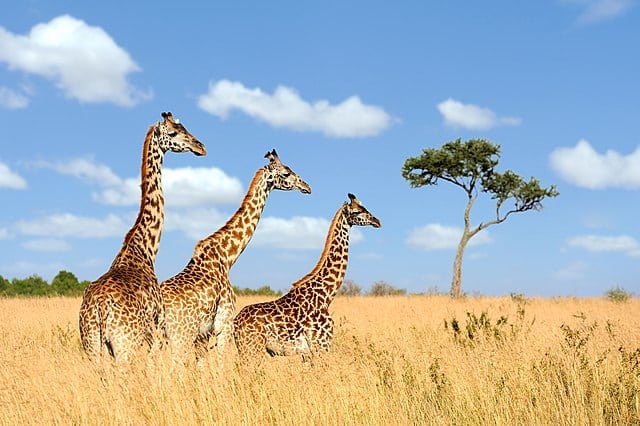
Physical Characteristics: The giraffe is the tallest land animal, with males standing up to 18 feet (5.5 meters) tall. They have long necks, distinctive spotted coats, and impressively long, purple tongues.
Unique Adaptations: One of the most remarkable adaptations of giraffes is their long neck, which allows them to reach leaves and vegetation high up in trees that other animals cannot access. They have dark tongues with high melanin content — a pigment that reduces the harmful effects of UV rays on a giraffe’s tongue. Their tongues can extend up to 18 inches (45 centimeters) and are prehensile, helping them grasp and strip leaves from branches. On the grosser end, they clean their nose and ears with their prehensile tongue.
Interactions with the Environment: Giraffes are predominantly herbivores, and their feeding habits significantly impact vegetation. By feeding on the leaves from the tops of acacia trees, they shape the tree canopy structure in their habitat. This is very significant as no other animals reach the high branches of acacia, nor prefer the thorny acacia branches.
Giraffes might not be much vocal, but they sure make everyone aware of their majestic presence with their height. Credits: Wikimedia/ Byrdyak
Saltwater Crocodile
Physical Characteristics: The saltwater crocodile is the largest living reptile, with males often exceeding 17 feet (5 meters) in length and weighing up to 2,000 pounds (900 kilograms). They have powerful jaws and sharp teeth.
Unique Adaptations: These crocodiles are formidable predators, known for their incredible strength and stealth. Their eyes and nostrils are situated on the top of their heads, allowing them to remain mostly submerged while still being able to see and breathe. Their armored scales protect prey and potential threats. Their bite force is only bested by the great white shark. Once they grab their prey, they pull it underwater and roll rapidly, tearing up pieces of the prey and feasting on it.
Interactions with the Environment: Saltwater crocodiles are apex predators in their ecosystems, playing a vital role in controlling the populations of fish and other prey. However, they are also known to kill humans and pose a severe threat to the human population in Australia.
The saltwater crocodile is the largest of the crocodile species. credits: Wikimedia/Molly Ebersold
Hippopotamus
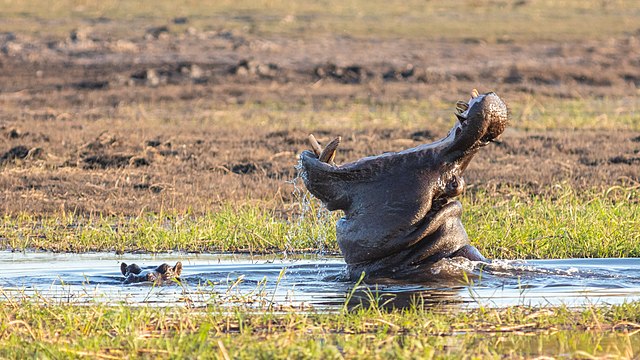
Physical Characteristics: The hippopotamus is a massive semi-aquatic mammal, with males weighing up to 4,000 pounds (1,800 kilograms). Despite their size, they are agile swimmers. Many believe that hippos ooze blood, giving their skin a reddish tinge. However, it is just their sweat that is red in color. They have the largest teeth amongst all land animals, with their canines being as long as 1.5 ft each. Additionally, a hippopotamus can open their jaws by 180° and at a length of 1.2 meters.
Unique Adaptations: Hippos are well-adapted to their aquatic lifestyle. They have webbed feet, which make swimming more efficient, and their eyes, ears, and nostrils are located on the top of their heads, allowing them to keep most of their body submerged while observing their surroundings. They can run quite fast despite their bulky body.
Interactions with the Environment: Hippos are essential in maintaining aquatic ecosystems. Their grazing behavior helps control vegetation around water bodies, and their nutrient-rich dung fertilizes the waters, benefiting other aquatic species. Hippos are also responsible for killing and eating humans, and new research suggesting that some hippos may also like to eat meat makes the scenario look no better.
Largest teeth, largest mouth. Hippos are all about superlatives. credits: Wikimedia/Diego Delso
Southern Elephant Seal
Physical Characteristics: The southern elephant seal is the largest seal species, with adult males weighing up to 8,800 pounds (4,000 kilograms). They are known for their distinctive trunk-like proboscis, or their nose, and their impressive size.
Unique Adaptations: Male elephant seals use their large proboscis to produce roars and establish dominance during breeding. Their bodies are adapted for deep-sea diving, with the abilities to hold their breath for up to two hours and to dive to incredible depths.
Interactions with the Environment: Southern elephant seals are deep-sea predators, feeding on various fish and squid species. As they migrate across vast oceanic areas, they transport valuable nutrients from one region to another.
They are called elephant seals for their trunk-like nose, but their size justifies the size too. Credits: Wikimedia/Antoine Lamielle
Colossal Squid
Physical Characteristics: The colossal squid is one of the largest invertebrates on Earth, with eyes that can be as large as basketballs and bodies reaching up to 46 feet (14 meters) in length. That’s almost half the length of the blue whale, which tops the list. Many believe the mythical squid-like beast called the Kraken was nothing but sightings of colossal squids.
Unique Adaptations: Colossal squids have the largest known eyes in the animal kingdom, which helps them detect prey and potential predators in the deep ocean. They have rotating hooks on their tentacles to capture and hold onto their prey effectively.
Interactions with the Environment: As deep-sea dwellers, colossal squids are vital players in the ocean’s food web. They are known to consume various fish and other cephalopodswhile providing sustenance for deep-sea predators like sperm whales.
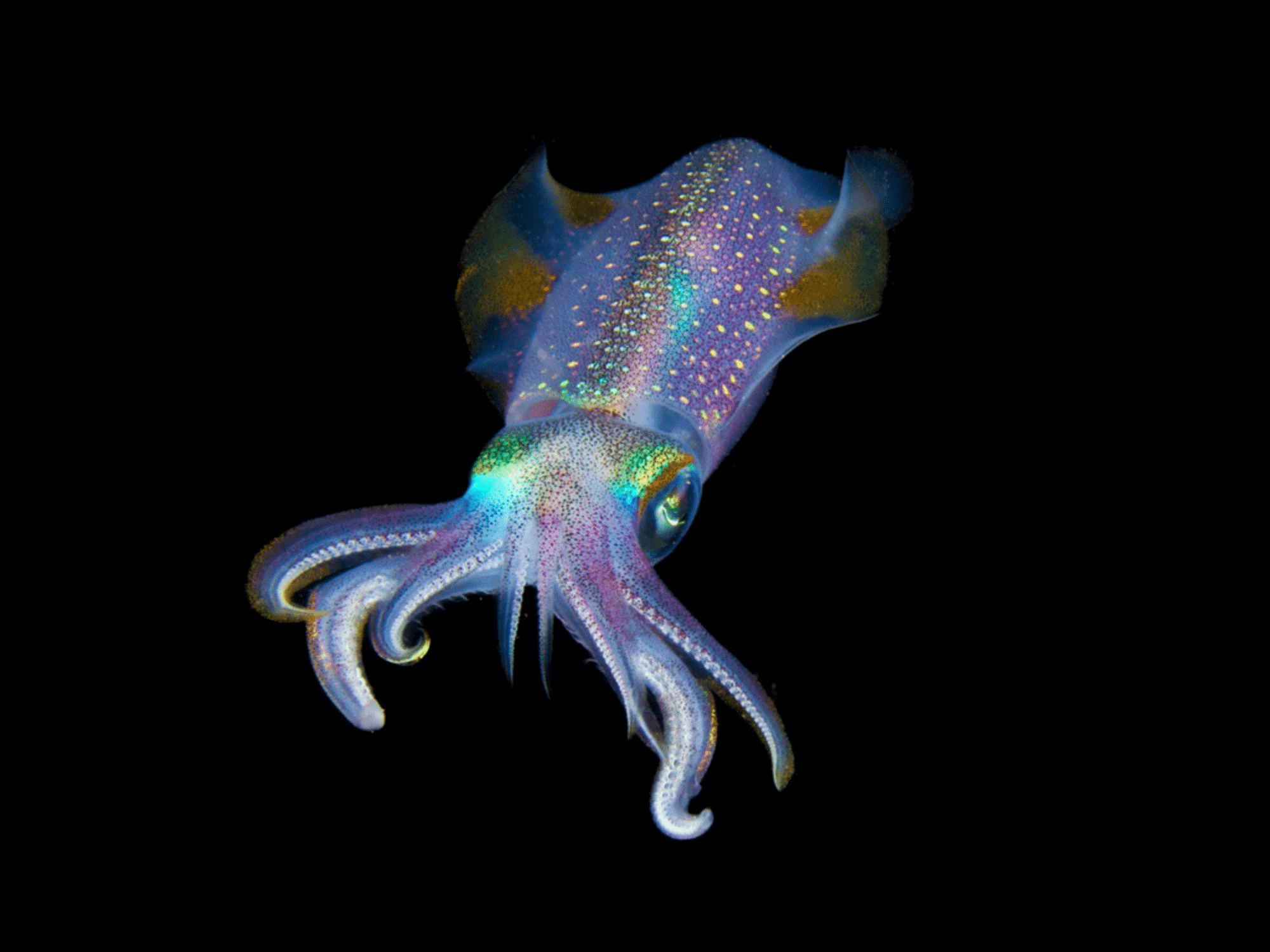
Colossal squid on display in Wellington Museum, New Zealand. Credits: DepositPhotos/JakeE
Whale Shark
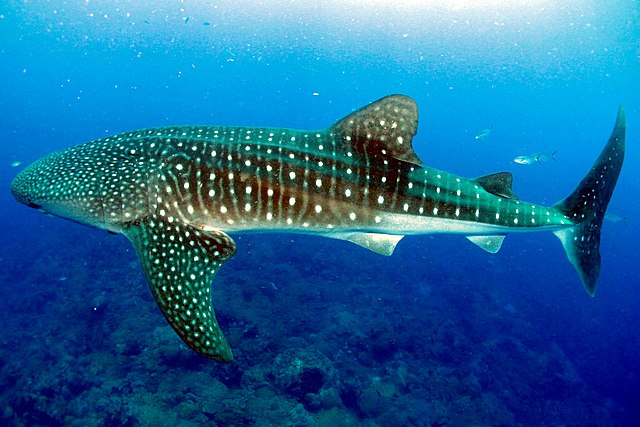
Physical Characteristics: The whale shark is the largest fish species, with lengths reaching up to 40 feet (12 meters) or more. Despite their size, they are filter feeders and consume tiny organisms like plankton.
Unique Adaptations: Whale sharks have broad, flat mouths and specialized filter pads to help them passively filter large volumes of water while retaining their microscopic prey. They are known for their distinctive checkerboard-like pattern on their skin.
Whale sharks are the largest species of sharks. Credits: Wikimedia/FGBNMS/Eckert
Polar Bear
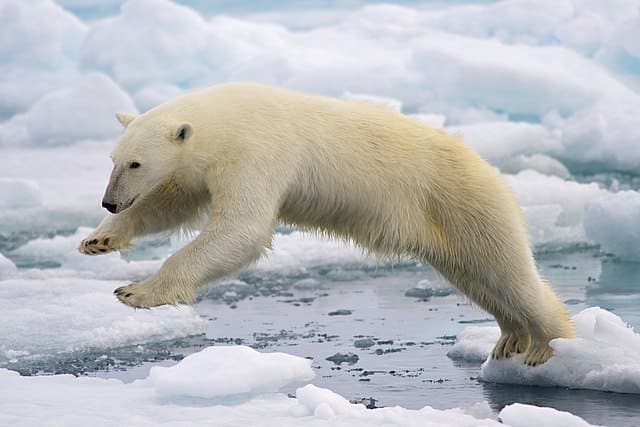
Physical Characteristics: The polar bear is the largest bear species, with males weighing up to 1,500 pounds (680 kilograms). They have a thick layer of blubber and dense fur to insulate them in their Arctic habitat.
Unique Adaptations: Polar bears are well-adapted to survive in freezing temperatures. Their white fur provides camouflage, helping them stalk prey effectively. However, they have black skin underneath all that fur. They are powerful swimmers, using their front paws as paddles and their back legs for steering.
Interactions with the Environment: Polar bears rely mainly on sea ice to hunt their primary prey, seals. With the impact of climate change on the Arctic environment, polar bears face significant challenges due to the reduction of sea ice.
Global warming might wipe polar bears off the face of the planet. It is time to take action —now or never. credits: Wikimedia/Arturo de Frias Marques
Anaconda
Physical Characteristics: The anaconda is one of the largest snakes in the world, capable of reaching lengths of over 20 feet (6 meters) and weighing up to 200 pounds (90 kilograms). The largest species of anaconda is the green anaconda.
Unique Adaptations: Anacondas are potent constrictors, using their muscular bodies to suffocate and overpower their prey. They are excellent swimmers, spending much of their time in water and relying on their ability to ambush and catch various aquatic animals. They swallow their prey whole and digest them over a few days to a week or two.
Interactions with the Environment: Anacondas are apex predators in their habitats, regulating the populations of prey species such as fish, birds, and small mammals. They also play a crucial role in nutrient cycling by consuming both herbivores and carnivores and excreting.
Largest snake in the world, the green anaconda. Credits: Wikimedia/ Fernando Flores
Although it may seem that being large is only a positive for animals, in reality, they need more resources to survive than smaller animals. In every natural extinction phase, the larger animals have perished first, while smaller species have survived. Megalodons went extinct, making way for great white sharks; dinosaurs evolved into birds; and insects are much smaller these days. Yet, the sheer size of the animals on this list can still blow our minds.
Glossary
Baleen plates: Long, thin, and flexible plates made of keratin found in the mouths of certain filter-feeding animals, such as blue whales. These plates act as a sieve to trap and retain food particles while filtering out water.
Proboscis: A long, flexible, and tube-like structure found in some animals, such as the southern elephant seal. It is often used for specialized functions, such as producing loud vocals during mating displays.
Prehensile: An adaptation that allows certain body parts, such as a giraffe’s tongue, to grasp and hold onto objects or food.
Apex Predator: A top-level predator in an ecosystem with no natural predators. Saltwater crocodiles and polar bears are examples of apex predators.
Cephalopod: A mollusk class including squids, octopuses, and cuttlefish. Colossal squids belong to this group.