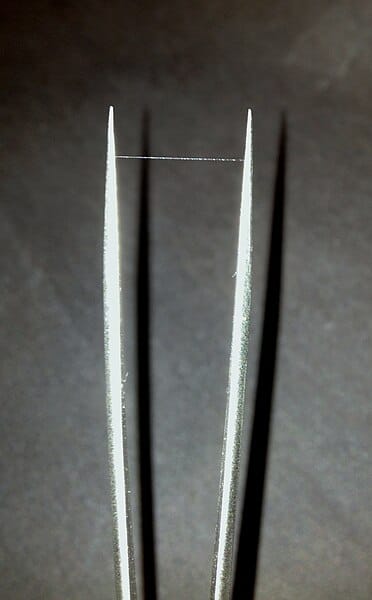
Spider silk is revered for its unparalleled combination of strength and elasticity. Strand for strand, certain spider silks can be stronger than steel and more flexibility than nylon. Orb-weaving spiders use these natural wonder fibers to spin intricate webs that can absorb immense energy without rupturing. The silks can gently immobilize fast-flying prey in a web without breakage.
Researchers have determined that the natural properties of spider silks come from their unique protein structure. The proteins form extraordinarily flexible crystalline units interspersed with amorphous regions that provide great tensile strength. This gives spider silk the ability to absorb huge amounts of energy before failing. Scientists have also discovered that subtle differences in protein structure can give different spider silks enhanced strength, stickiness, or stretchiness.
Creating spider silk in the lab: The science behind it
As scientists unravel the complex protein formulas behind natural spider silks, many are now developing synthetic versions in the lab. Producing synthetic spider silk allows researchers to engineer these exceptional properties into new biotech materials.
Researchers have devised ingenious methods to generate synthetic spider silk by co-opting living organisms as production factories. They insert spider silk genes into the DNA of bacteria , yeasts, plants, silkworms, and even goats! When activated, these genes cause the organisms to manufacture exceptional spider silk proteins within their cells based on the programmed genetic code.
Bacteria are tiny, rapidly multiplying silk producers popular in lab-made spider silk designs. Scientists identify and isolate the spider silk DNA sequences that code for the desired silk protein properties. These sequences get spliced into plasmids – circular DNA molecules that easily insert into bacteria. The engineered bacteria replicate and express the proteins, which self-assemble into synthetic silk fibers.
Yeast and plant-based production methods work similarly. Silkworms and goats have also been successful biofactories for spun silk using implanted spider silk DNA. Key advantages are that researchers can dial up specific silk protein properties by modifying the input DNA sequences. Sustainable supplies of tailored synthetic silks can be harvested from these living producers. Whether using microbes, plants, or animals – all roads lead to customized spider silk made-to-order without ever needing an actual spider!
This lab-made silk isn’t just for show – it has some amazing uses. Imagine clothes stronger than any we’ve ever had, or medical materials like sutures that help heal wounds better. The possibilities are endless and super exciting!
Synthetic spider silk could change the world in many ways, from fashion to medicine. It’s a perfect example of how looking to nature can inspire incredible science. The future of synthetic spider silk is as exciting as it is unlimited!
Glossary
Synthetic: Something made by combining different artificial substances, often imitating a natural product.
Flexibility: The ability of a material to bend without breaking.
Bacteria: Microscopic living organisms, often consisting of one cell, that can be found everywhere and can be both beneficial and harmful.
Gene: A unit of heredity which is transferred from a parent to offspring and is held to determine some characteristic of the offspring.
Sutures: Stitches used by doctors to close cuts or wounds.