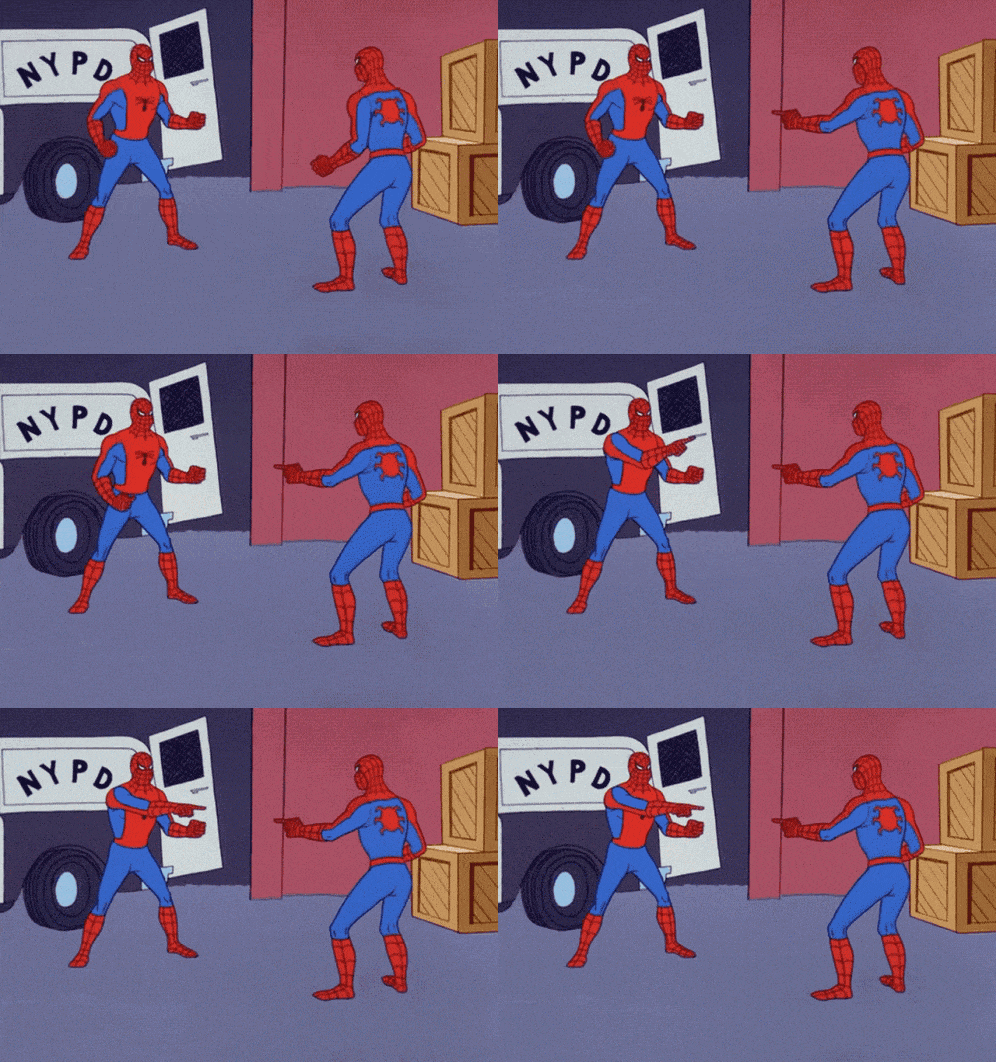
A French criminal trial had to deal with more science than law, as DNA trail left by a criminal came from an identical twin. Conventional DNA testing could not establish which of the brothers had their DNA on the gun found during the investigation. The men are monozygotic twins—the result of a single egg splitting into two after being fertilized by a single sperm—making them exact copies of one another, sharing the same DNA.
When DNA is discovered at a crime scene, forensic scientists usually attempt to identify the person it belongs to using short tandem repeat (STR) analysis. The technique uses polymerase chain reaction (PCR), a process that produces millions of copies of a DNA sequence, to amplify up to 30 specific regions of the genome with high variation.
These amplified regions are sequenced to determine the number of STRs and their base-pair arrangements, which are then compared with genealogy databases or suspects’ STR profiles to identify potential matches. In regular cases, it’s easy to differentiate one person from the next. However, with identical twins, there’s no difference at all in those regions of the genome.
The idea here is to broaden the search using whole-genome sequencing, which can distinguish identical twins. In this process, the entire genome of a person is analyzed to identify differences caused by mutations after an egg splits. These changes, however, are rare. A 2014 study identified just five genetic changes in a pair of adult twins. However, whole-genome sequencing requires obtaining sufficient DNA to proceed.
Other researchers yielded results by sequencing mitochondrial DNA. Compared with nuclear DNA, used in genome sequencing, mitochondrial DNA (mtDNA) mutates more often, making it more likely to differ between twins. US courts admitted mtDNA analysis as evidence since the mid-1990s, but it has never been used in cases involving twins.
Adding methyl groups to DNA, a process called methylation, can change how genes work. This is especially promising, as these changes, termed epigenetic, are caused by behavioral factors such as diet and smoking habits, as well as environmental factors. The DNA-methylation technique is yet to be used in court to distinguish twins. This kind of analysis also falls short if the twins lead similar lifestyles or are exposed to similar environmental factors, such as pollution, because their variation becomes smaller.
These new techniques are promising, but there are hurdles that must be addressed before they can be used in forensic investigations. The larger amounts of DNA needed to gather information through these procedures are rarely found at crime scenes; often, the samples contain only small amounts of genetic material, and that too in poor condition. Analyses can also be expensive and time-consuming, and the work must be sufficiently conclusive to count as evidence. Last year, whole-genome sequencing was admitted in a murder trial for the first time in the US.
The bottom line is very clear from what Xanthé Weston, a criminologist and researcher at Central Queensland University in Mackay, Australia, says: “I would never want to see somebody prosecuted on the basis of DNA alone.” Instead, she suggests combining DNA evidence with other types of evidence, such as fingerprints, during prosecution, as there are many reasons someone’s DNA might end up at a crime scene.
Copyright @smorescience. All rights reserved. Do not copy, cite, publish, or distribute this content without permission.
SUBSCRIBE TO OUR NEWSLETTER
.......... ..........Subscribe to our mailing list to get updates to your email inbox.
Monthly Newsletter