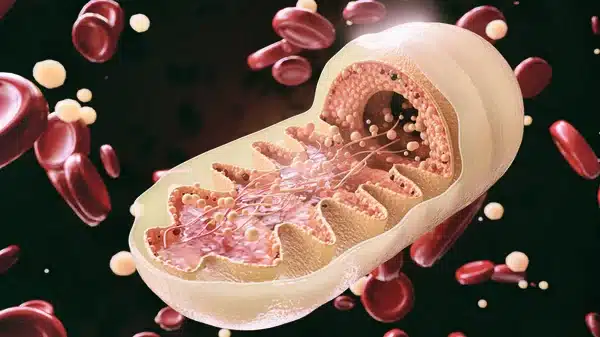
Cells require energy in the form of adenosine triphosphate (ATP), commonly known as the cell’s energy currency. Mitochondria mint this currency, as well as store it for some time before dispatching it to the rest of the cell. Cancer cells have been reported to hijack these mitochondria from immune cells to infiltrate lymph nodes, according to a study published in Cell Metabolism.
Scientists have had a hard time explaining how some cancer cells manage to survive and spread within lymph nodes, which are packed with cells that can kill them. Derick Okwan-Duodu, an immunologist and clinical pathologist at Stanford University in California, investigated mitochondrial transfer, in which mitochondria from one cell move to another.
Okwan-Duodo and colleagues implanted cancer cells in mice, hijacked mitochondria from a variety of immune cells, and did so at equal rates, regardless of whether the cells were implanted in the lymph node or the skin.
By stealing the ‘batteries’ of the cells, tumor cells enjoy two benefits. First, mitochondrial loss weakens immune cells; second, it triggers an advantageous molecular pathway in cancer cells that hijacks them. Cancer cells that acquire mitochondria begin to express genes associated with the type I interferon pathway, an immune signalling cascade that may help tumor cells evade the immune system and promote their infiltration into lymph nodes. Silencing these genes reduced the cancer cells’ capacity to migrate into the lymph nodes of mice. These benefits were unaffected when researchers abolished the mitochondria’s ATP production, indicating that the organelle’s energy production is not essential for these effects.
Minna Roh-Johnson, a biochemist at the University of Utah in Salt Lake City, says this is interesting because a lot of previous work on mitochondrial transfer has assumed that the only role of the purloined organelles is to supply energy to cancer cells. Her group reported in 2023 that mitochondrial transfer renders them metabolically dysfunctional but still promote tumour-cell growth.
According to Okwan-Duodo, this study is not the first instance of mitochondria theft linked to cancer. A study published last year showed that cancer cells stole mitochondria in neurons to spread to the brain.
Metastasis into the lymph nodes greatly jeopardizes a patient’s prognosis, making it crucial to understand how cancers spread there. Immune cells can be manipulated to eliminate mitochondria-laden cancer cells that evade immune responses, which might be a pivotal outcome in immunoengineering—an emergent technology that fuses immunology, materials science, and engineering to develop better treatments.
The team will now work on tracking what mitochondria do within a cancer cell and whether the mitochondria it receives determine where it can thrive.
Mitochondria are semi-autonomous organelles that have their own DNA and can replicate independently. Mitochondrial DNA (mtDNA) mutations are key players in cancer susceptibility, its progression, and plausible prognosis. Studying mtDNA alterations may become a core principle in precision oncology, in which a patient’s unique tumor biology is analyzed to develop a tailored cancer treatment.
Okwan-Duodo’s research may initiate a new era of studies linking mitochondrial transfer to various cancers and, in the process, provide scientific insights into precision oncology.
Copyright @smorescience. All rights reserved. Do not copy, cite, publish, or distribute this content without permission.
SUBSCRIBE TO OUR NEWSLETTER
.......... ..........Subscribe to our mailing list to get updates to your email inbox.
Monthly Newsletter