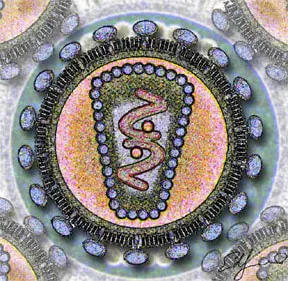
According to a new clinical trial, two mRNA-based vaccines elicit an immune response against HIV. This is only the third trial that involved using an mRNA vaccine against HIV.
Around 41 million people have AIDS, the disease caused by HIV, worldwide. Currently, there are no vaccines available for the disease.
To design a vaccine against a virus, scientists usually study the mechanism by which the body clears out the pathogen. However, HIV attacks the immune system, and the body seldom manages to clear it out. This makes designing vaccines against HIV very difficult. The whole process needs to undergo rigorous testing through trial and error.
mRNA vaccines were first used against COVID-19. The technology is apt for designing HIV vaccines as well. Unlike other methods that take years to modify, mRNA vaccines can be quickly modified in just months. This allows researchers to test out multiple ideas. These vaccines pass instructions to the cells through mRNA, which leads to the production of specific proteins found on the surface of the viruses. Then an immune response is triggered, which recognizes and clears out the virus when exposed.
HIV uses an outer envelope made up of proteins to bind to and infect cells. A small trial was conducted by William Schief at Scripps Research in La Jolla, California, who works on protein design. This experiment was meant to compare two different vaccination approaches. In the first one, the standard method is used in which cells are directed to produce envelope proteins that float freely. In contrast, the mRNA vaccine instructs the cells to produce envelope proteins that are attached to the cell membrane— similar to how they are found in viruses.
108 healthy adults aged between 18 and 55 across ten study sites participated in the trial in the United States. In the trial, two membrane-bound vaccine candidates and one unbound candidate were tested.
Each participant received three doses of a single vaccine, several weeks apart, at a low or high dose. The vaccine that was administered was chosen randomly. The vaccines were manufactured by the pharmaceutical company Moderna in Cambridge, Massachusetts, where Schief is vice-president for protein design.
Around 80% of the vaccine recipients who received either of the two membrane-bound
protein vaccines went on to produce antibodies that could block that protein from entering the cells. On the other hand, only 4% of the volunteers receiving the unbound-protein vaccine developed corresponding antibodies.
“The difference is pretty striking,” says Lewin, who heads the Peter Doherty Institute for Infection and Immunity in Melbourne, Australia. She expects the findings to inform the development of future vaccine candidates.
In both high and low doses, the three vaccines were well tolerated. However, seven people — 6.5% of the study group — developed hives and prominent, itchy rashes. Symptoms in five people lasted for more than six weeks, with some cases even lasting for years.
Two previous trials tested a strategy in which participants received initial injections of one mRNA vaccine candidate and booster doses of other mRNA vaccine candidates in May. The trial was conducted with the goal of eliciting a broad immune response that could defend against a wide spectrum of HIV variants. Good results were obtained from the trial.
In one of those trials, around 18% of the participants developed rashes, hives, and other skin reactions. In their May paper, Schief and his colleagues established that something about the combination of HIV and mRNA— perhaps caused the side effect, but they couldn’t pinpoint what exactly causes these side effects. According to Lewin, scientists need to find out what causes the side effects, but that should not hinder the progress of testing out vaccines. The need for an HIV vaccine is paramount.
Copyright @smorescience. All rights reserved. Do not copy, cite, publish, or distribute this content without permission.
SUBSCRIBE TO OUR NEWSLETTER
.......... ..........Subscribe to our mailing list to get updates to your email inbox.
Monthly Newsletter