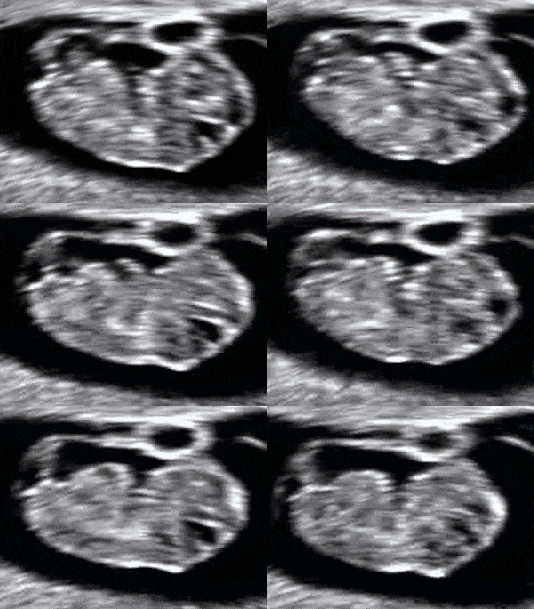
Spinal muscular atrophy is a rare genetic disorder that affects one infant in every 10,000. Babies with a severe form of this disease don’t live past their third birthday. However, a two-and-a-half-year-old girl has survived the condition with no manifestations of the disease. This has been achieved in a rare medical feat— treating the disease right from late pregnancy. The child’s mother took the oral drug Risdiplam daily for six weeks when she was 32 weeks pregnant, while the baby took the drug from roughly one week old and perhaps will take the drug for the rest of her life. According to Michelle Farrar, a pediatric neurologist at UNSW Sydney in Australia, the study highlights how necessary early treatment is in cases like this.
Spinal muscular atrophy affects motor neurons and gradually weakens muscles. In severe forms, like this child’s, patients lack the SMN1 gene and have a copy or two of the SMN2 gene. The lack of expression of these genes creates a deficiency in the formation of proteins that maintain motor neurons in the spinal cord and brainstem. The protein is essential during the second and third trimesters, and its significance is maintained for the first few months of life.
Until now, spinal muscular atrophy treatment has been administered after birth. However, infants lacking both copies of the SMN1 gene and having two copies of the SMN2 gene are born with some of the symptoms. Richard Finkel, a clinical neuroscientist at St. Jude Children’s Research Hospital in Memphis, Tennessee, led the study and also saw room for improvement in the treatment.
The idea of administering drugs while the baby was still in the womb was pitched by the parents. They had experienced a loss before from this disease and wanted to know if there was a way to start treatment before birth. The FDA approved the study for this individual case. She took the drug Risdiplam for six weeks beginning at the 32nd week of pregnancy. Tests of amniotic fluid and cord blood at delivery suggested that the drug was reaching the fetus while it was in the womb. The baby had higher levels of SMN protein in the blood and showed lower levels of nervous damage. She had no signs of muscle weakness and had normal muscles. Finkel says this is reassuring, but he suggests lifelong monitoring of the girl. Although this is a unique case, it opens the window to run more studies where in-utero treatment can be tried against diseases for which post-birth therapies are insufficient. The current span of treatment is very narrow, and this new study proves the importance of developing a wide window of treatment time.
Copyright @smorescience. All rights reserved. Do not copy, cite, publish, or distribute this content without permission.
SUBSCRIBE TO OUR NEWSLETTER
.......... ..........Subscribe to our mailing list to get updates to your email inbox.
Monthly Newsletter