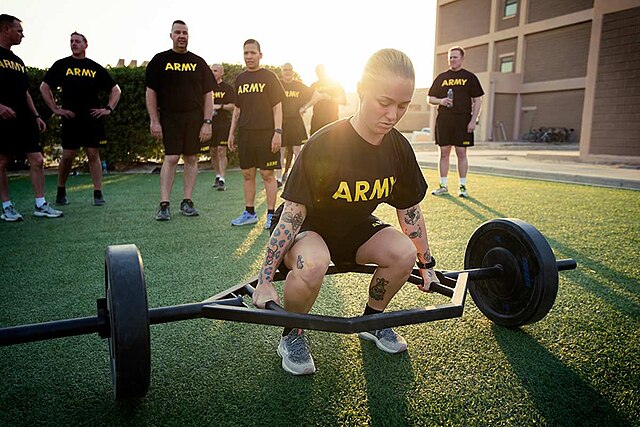
Army Combat Fitness Test. Credits: Wikimedia/The US Army
A few generations ago, most children would choose between showing an interest in sports or a passion for science. It was rare for kids to enjoy the two, and there needed to be more understanding of how science aided sport and could improve training, times, and performances. Affordability was another major factor. A soccer ball was a percentage of the price of a telescope, and boxing gloves were much easier to source than a microscope.
Thankfully, things have changed. Science equipment is now more affordable than ever before. Children can access science fairs, programs, documentaries, online tutorials, and more. Visit your local library during the school break, and you’ll likely see groups huddled in the corner discovering and enjoying science. There’s a better understanding of how science affects our everyday lives and how investment in the next generation of scientists could shape our world.
How does science impact youth, college, and professional sports? In many ways, more than you might know. The leading teams in the NFL base much of their training regimes on science and numbers. Fans use probabilities and mathematics to predict the outcome of games at apps offering online sports betting in Georgia to Las Vegas. Athletes trust cognitive science and other fresh ideas to help them improve mentally and physically.
It's time to get excited
There’s much to be excited about as sports and science forge a close working relationship we’ve never seen before. It may have taken longer than it should’ve. Still, the sports industry is helping bring science to a fresh new audience, showcasing its possibilities and how science can positively impact your everyday life. From how you feel in the morning to how you sleep at night. Science is working hard behind the scenes to make your life enjoyable.
Science aims to showcase its capabilities in the modern world and uses top sports players, athletes, and high-profile working case studies. If the masses see how minor tweaks are introduced by sports scientists, they will place more trust in the scientific findings and the ambitious work in the industry today. That’s the theory, anyway. Modern science is more than you see on TV or learn in the classroom. It’s not a full-time job battling against the next pandemic before it hits.
Science can improve our lives on many fronts. The quickest and easiest way to prove that is by looking at how sports science is helping athletes train for longer, compete into their 40s in many circumstances, and drastically hasten recovery times. It’s little wonder the top teams from the NFL, NBA, and English Premier League are investing billions into sports science. But you don’t need Manchester City’s budget to get in on the action. Science is for everyone, and we’ll prove it in this article.
English Premier League Ball. Credits: Wikimedia/Ganyball
Training
Sports science was adopted only by the top athletes, including boxers incorporating strength and conditioning into their schedule. But today, S&C is present in many gyms, from the top professionals to local amateurs. That shows if the leading names in sports allow science in, it soon creates a trend and filters down through the system. And as equipment becomes more affordable and accessible, it’s more widely used.
One of the major improvements science has made is sports-specific training and movement. Many new exercises tackle the pros and cons of repetitive movements in sports, including tennis or golf. In the past, constantly swinging a baseball bat or tennis racquet from a young age would cause injuries and problems in later life. But with sports-specific training and movements, injuries reduce while performances improve.
Young athletes’ training and performance times are improving, and we already see fewer career-threatening injuries suffered at a young age and lasting into adulthood. We’re also noticing a trend where established scientists give their free time to local sports clubs, helping improve young athletes while showcasing their ability as a scientist.
There’s no more fantastic endorsement than winning results. And if that comes with an opportunity to find and nurture the next Tiger Woods, Lewis Hamilton, Cristiano Ronaldo, Anthony Joshua or LeBron James, even better. We’re excited about the blossoming relationship between science and sports while holding high hopes for the future.
Recovery
There was a time not long ago, perhaps less than two decades when sports had their priorities all wrong. Dangerously wrong. Young amateur boxers were discouraged from taking on fresh water during training, while professionals stripped weight for fights in the most dangerous manner possible. Those life-threatening hacks for cheating the scales were also present in MMA, college wrestling, and other combat sports.
That’s no longer the case, and we’re delighted things have improved dramatically, giving young athletes more protection and a better understanding of how to look after and protect their bodies while getting more from training.
Another example of how sports’ old bad habits have been squashed by science is evident in the recovery programs of athletes. Previously, a rest day was a wasted day in sports. A time when the competitor could’ve been working hard and improving. Now we understand hard work and improvement only exist with rest days.
Sleep and rest are pillars of peak physical fitness. More fitness enthusiasts are practicing active rest days, with light stretching, an easy walk, meditation, or yoga. Give it a try. Break up your week at the gym by taking an active rest day. You’ll soon see the benefits.
Mental preparation
Have you experienced cognitive training? It’s a relatively new feature of sports and perhaps the most impressive example of science dragging many professional sports bodies into the 21st century.
Cognitive or brain training takes many forms and remains in its infancy, but in its most basic form, it’s the practice of preparing the mind for the strains of competing at a top level. Our favourite example has athletes watching their last performance and spotting mistakes.
The quicker they spot the same mistake as their coach, the better. The goal is to help an athlete identify and block the error early.