While writing scientific papers is a crucial part of a science career even when you’re still at school, it isn’t the most exciting thing. This is particularly true for students who may be passionate about science but often struggle to stay engaged if lessons only consist of reading from a book. Like many subjects, science becomes more engaging when there are activities, so what are some ways you can make science class more engaging?
Expert Demonstrations
All kinds of scientists want to inspire the next generation, and demonstrations are some of the best ways to achieve this. If you are working on a part of the curriculum that you feel isn’t as engaging as it could be, arranging a visitor to host a demonstration could be just what you need. Some science groups will eagerly come into schools to perform an experiment and answer questions, while virology lab services can also provide detailed information about their work. Since you can’t see a lot with the naked eye on science, the creative approach is a great way to keep students engaged.
In-Class Experiments
If you can’t arrange for experts to drop in, you can still engage your students by carrying out in-class experiments. You won’t be setting volatile elements on fire, but instead focusing on safe science experiments for the classroom that will still wow and captivate your students. There are multiple options, including the classic baking soda and vinegar volcanoes. Depending on how old your students are, they can do experiments themselves so they understand the reactions better.
Nature Cameras
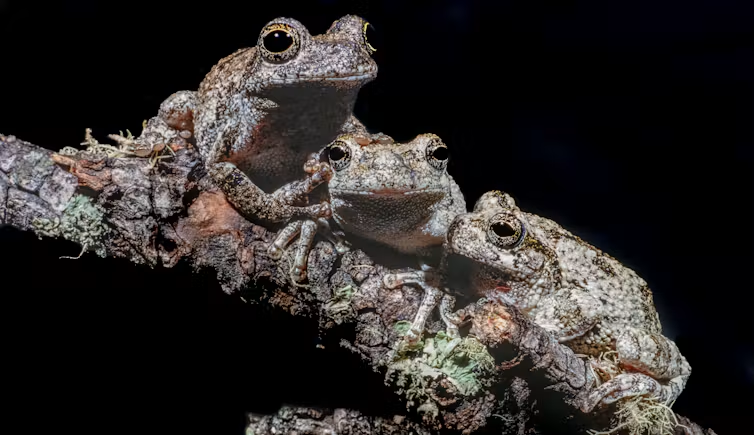
If you live somewhere where there is plenty of exciting wildlife but don’t have the means to trek into the wilderness every day, nature cameras are a superb chance to showcase animals in their natural habitat. Many environment organizations offer nature cam streams, while some even put together the best bits of the week, especially if they come across a particularly rare sight.
Digital Simulations
Unfortunately, you can’t show your students what happens to a star when it dies in real life. You can’t show them the inside of a volcano before an eruption. But you can find digital simulations that make you feel like you’re right there, without having to worry about parents signing off for a field trip. Digital simulations are a great way to showcase things that you could never witness otherwise and can trigger interest in the bombastic and the minuscule.
Getting Outside
Exercise is always important for kids and you can use this to encourage your students to enjoy science. Besides this, going on nature walks and developing scavenger hunts for various insects, trees, and other outdoor things will keep them engaged during the activity and give them something to stick in their science scrapbook.
Engaged
The world needs passionate scientists to develop cures and identify better ways to do everyday things. But this won’t happen if the lessons are not engaging enough to inspire the next generation of scientists. If you’re looking for ways to make the class more engaging, consider these tips to shake things up a bit.
Copyright @smorescience. All rights reserved. Do not copy, cite, publish, or distribute this content without permission.
Join 20,000+ parents and educators
To get the FREE science newsletter in your inbox!
SUBSCRIBE TO OUR NEWSLETTER
.......... ..........
Subscribe to our mailing list to get updates to your email inbox.