Flipping a coin seems like a trivial way to make a random choice. But behind this simple act lies complex probability theory that predicts the likelihood of the coin landing on heads or tails. This article explains the mathematical concepts of how a simple coin toss can reveal profound insights into the realms of chance and uncertainty!
The basics of probability
Probability, in its essence, is about predicting the likelihood of various outcomes. For a coin toss, there are two possible outcomes – heads or tails. If the coin is fair, each outcome has an equal chance of occurring: a 50% probability. This fundamental concept, rooted in basic probability theory, sets the stage for understanding more complex scenarios. So, when you flip a coin, you’re essentially participating in a live demonstration of probability theory!
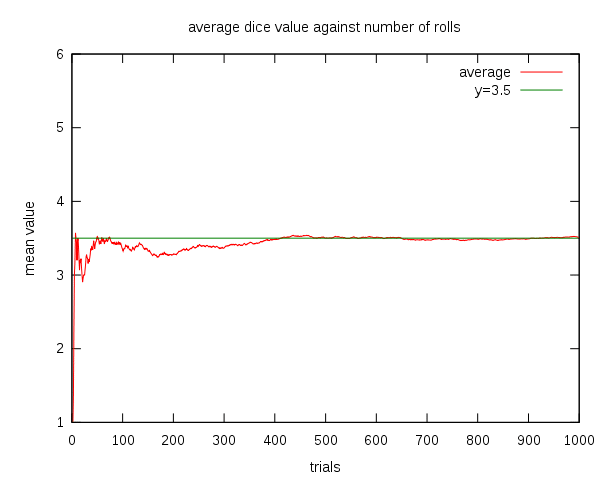
Here’s where things get interesting. The law of large numbers tells us that as you flip a coin more and more, the proportion of heads to tails will get closer to 50/50. It’s a cornerstone of probability theory, beautifully illustrating how randomness evens out over time. This law doesn’t mean you’ll always get an equal number of heads and tails, but rather, the discrepancy shrinks with more flips. It’s a testament to the predictability embedded within randomness!
Probability Theory Visualization, Credit: Wikimedia/Charthur
Real-life implications
The implications of coin toss probability extend far beyond a simple game of chance. It’s used in sports, decision-making, and the financial world. For instance, many strategies in finance and economics are based on the principles of probability, where decisions often resemble a coin toss. Understanding the underlying probabilities helps make more informed choices, whether in investment or life decisions.
Now, here’s a twist: not all coins are created equal. Slight imbalances in a coin or how it’s flipped can introduce bias . A study by Persi Diaconis, a Stanford mathematician, showed that coins are slightly biased toward the face they start on. This intriguing find underscores the complexity behind seemingly straightforward events.
The coin toss is a microcosm of the broader role of probability in our daily lives. From weather forecasting to health risks, probability shapes our understanding of the world. It helps us navigate uncertainties, making educated guesses in situations where certainty is unattainable.
Largenumbers, Credit: Wikimedia/NYKevin
Probability in the digital age
In the digital era, understanding probability is more crucial than ever. Algorithms and machine learning , which underpin much of modern technology, are steeped in probabilistic thinking. From Google’s search algorithms to Netflix’s recommendation systems, probability plays a pivotal role in shaping our digital experiences.
Probability isn’t just an academic exercise; it’s a vital skill in today’s world. Incorporating probability education in schools can prepare students for a world where decision-making often involves weighing different probabilities. Understanding the basics of probability fosters critical thinking, equipping the next generation to navigate a world full of uncertainties.
Flipping a coin might be a simple act, but it opens a window into the complex and intriguing world of probability. By understanding the principles of probability, we can make more informed decisions and appreciate the role of chance in our lives. So next time you flip a coin, remember – you’re not just leaving it to chance; you’re engaging with a fundamental aspect of our world.
Glossary
Probability Theory: A branch of mathematics that deals with the analysis of random events. It determines the likelihood of different outcomes in an uncertain event, like flipping a coin.
Law of Large Numbers: A principle in probability and statistics that states as more experiments are conducted, the actual ratio of outcomes will converge on the theoretical or expected ratio of outcomes.
Bias: In the context of a coin toss, bias refers to any factor that causes the coin to have an uneven chance of landing on heads or tails, deviating from a 50/50 distribution.
Algorithms: Step-by-step procedures or formulas for solving a problem or completing a task. In digital technology, algorithms are used for calculations, data processing, and automated reasoning.
Machine Learning: A field of computer science and artificial intelligence where algorithms improve automatically through experience and use of data.