While one animal eats salmon right off the stream, the other one in Africa hunts down larger prey like wild buffalo. Although they would never face one another off anytime soon, it is still an interesting idea to compare the strength of a grizzly bear, and a lion.
How do grizzly bears and lions look?
Grizzly bears and lions are both big, but they look different. Grizzly bears can weigh as much as three big adults and are as tall as a basketball hoop when they stand on their hind legs. They have long claws and a hump on their back.
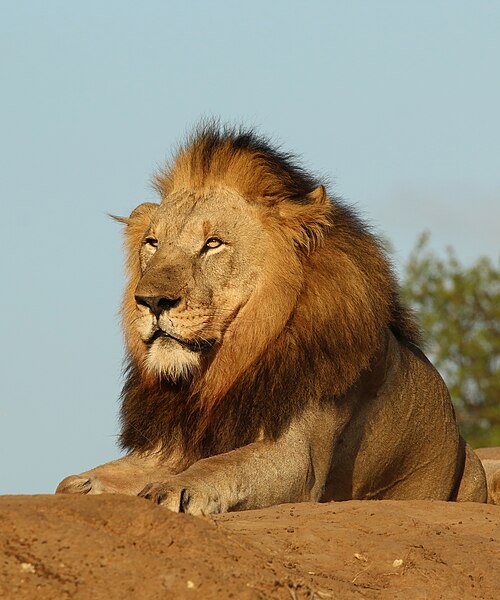
Lions, especially males with their pompous mane, are usually smaller. They weigh as much as two big adults and are as tall as a kitchen counter. But lions have strong teeth and sharp claws in their big paws. They belong to the category of cats, and are part of a community of animals called big cats. This includes leopards, tigers, jaguars etc.
Grizzly bears and lions live differently. Grizzly bears usually like to be alone. Moms and their babies will hang out together, though. They eat a lot of different things like berries, roots, fish, and small animals. If they need to, they can hunt big animals. Bears also enjoy a hefty treat of honey, which has loads of sugar. However, honey comes in beehives, and beehives have bees. Grizzly bears eat the bees and their larvae too as a protein snack. During winters, these bears go into a long sleep called hibernation .
Lions are different. They live in groups called pride with their family and friends. A typical pride has six lionesses, and two to three lions that have joined from other pride. The offspring stay with their mother. Around a third of the daughters leave to form a pride of their own, while the males join different prides to find an unrelated mate. This allows the genes of two different prides to mix, which is thought to produce stronger progeny . They eat only meat, and they can work together to hunt big animals like zebras. Even though they like being in groups, lions can be protective of their space.
Lion, Credit: Wikimedia/Charles J. Sharp
Who is stronger: a grizzly bear or a lion?
So, who’s stronger? Grizzly bears or lions? Both have their strong points. Grizzly bears are bigger and have long claws and a strong bite. Lions, on the other hand, are good at working together and are very quick. They have sharp claws that they can hide and use when needed. These claws are called retractable claws , as lions can retract then inwards when not needed.
But remember, these two animals don’t live in the same place. They’re not meant to fight each other. They have their strengths because of where they live and what they eat.
Grizzly bears, lions, and nature
Grizzly bears and lions are important to nature. They help keep other animal numbers under control. But they are both in trouble because of things like losing their homes, changes in weather, and problems with people.
There used to be a lot more grizzly bears in North America, but now they mostly live in special parks and protected areas. Lions in Africa are also having a hard time because they are losing their homes, getting sick, and having trouble with people.
People are trying to help these animals. They should make special areas for them to live in, stop poaching bears and lions for their hide, and teach others about why these animals are important. We need to understand and care about these animals. This is not just for the safety of these animals, but also for our own safety. With a loss in habitat , lions and bears enter human residences for food and shelter, which brings an unlikely confrontation.
Glossary
Retractable Claws: These are claws that can be extended or retracted. Lions, like all cats, have retractable claws which are extended for capturing prey or climbing but kept within the paw when not needed to prevent their wear and tear.
Hibernation: This is a period of inactivity that some animals, like grizzly bears, undergo during winter. During hibernation, these animals significantly reduce their metabolic activities and enter a state of deep sleep.
Pride: In the context of lions, a pride refers to a social group. A lion pride typically consists of several related females and their offspring, along with a smaller number of adult males.
Poaching: Poaching refers to the illegal hunting or capturing of animals. It’s often related to the illicit trade in wildlife and wildlife products.
Progeny: This term refers to the offspring or the young ones of a living organism.
Territory: An area that an animal or group of animals defends as its exclusive domain for hunting, living, and reproducing. Both grizzly bears and lions are territorial creatures.
Genes: A gene is a segment of DNA that carries the instructions for making a specific protein, or, in some cases, a set of closely related protein variants. These proteins are responsible for our physical characteristics, as well as the risk of certain diseases. In the case of lions, the mix of genes from different prides leads to stronger progeny.
Habitat: The natural environment where a species lives. It’s where an organism finds the necessary food, shelter, and breeding opportunities to survive.