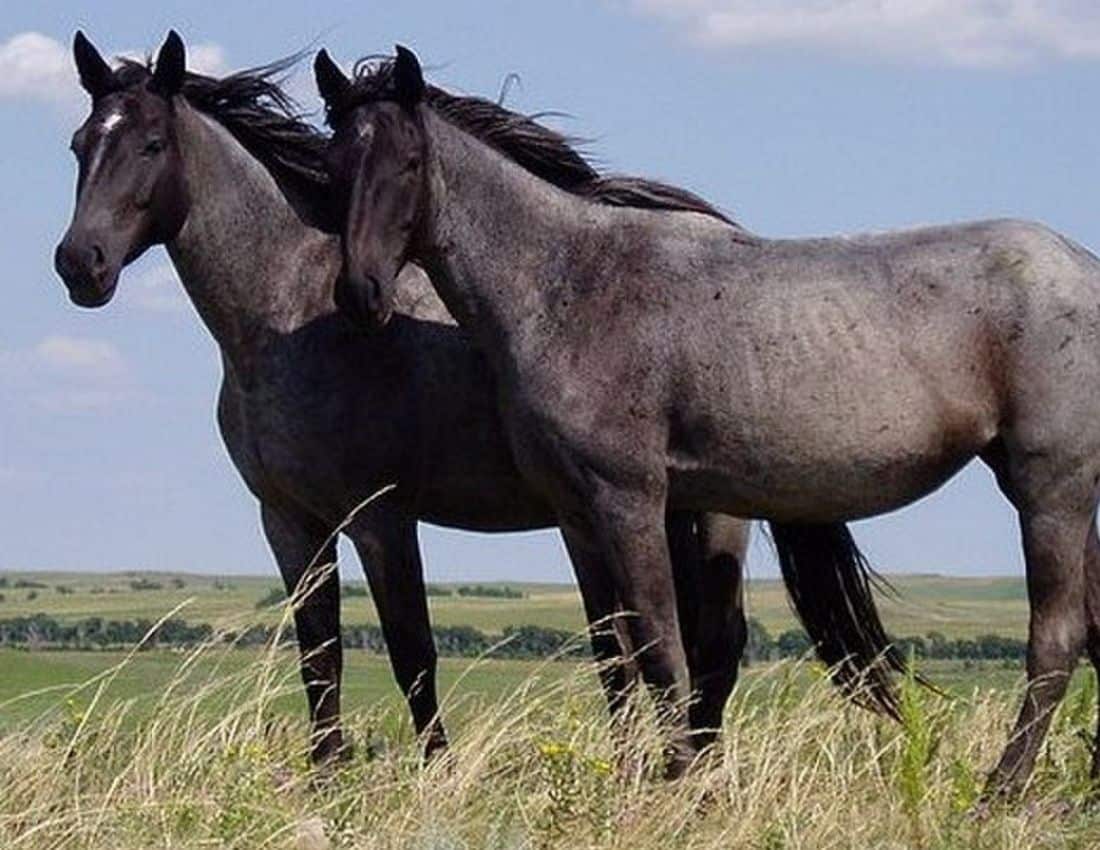
To fathom an animal standing on all fours while asleep is a long stretch. Yet, horses are known to be standing while asleep. However, is this true, and if yes, to what extent? Let’s find out.
Do horses have stages of sleep?
Like all mammals, horses go through different sleep cycles, including REM (Rapid Eye Movement) sleep and non-REM sleep. REM sleep is the phase associated with vivid dreams, and during this stage, the body experiences muscle atonia . In this state, muscles are temporarily paralyzed to prevent the acting out of dreams. Non-REM sleep consists of more profound, more restorative sleep. During this phase, breathing and heartbeat are reduced. Horses, on average, need around 2.5 to 3 hours of REM sleep per day.
Why do horses sleep standing up?
Horses can indeed sleep standing up, and they do so by utilizing a mechanism called “stay apparatus.” The stay apparatus is a system of tendons and ligaments that allows horses to lock their knees and hips, allowing them to stand in a relaxed state without using much energy. This mechanism is particularly useful in the wild, where a horse needs to be vigilant for predators. The exciting part is that many other mammals, like elephants, also display a similar knack for sleeping while standing.
Do horses ever lie down to sleep?
While horses can snooze while standing, the question remains: do they ever lie down to sleep? The answer is a resounding yes. Horses do lie down to achieve the deeper stages of sleep. Lying down allows them to fully relax their muscles and enter the non-REM sleep that is crucial for physical restoration and overall well-being. They experience short bursts of sleep, ranging from a few minutes to half an hour, throughout the day and night. These brief naps contribute to their overall sleep quota and help them maintain the alertness required for survival.
Observing a horse lying down is a sign that the horse feels safe, comfortable, and secure in its environment. However, horses are selective about when and where they choose to lie down. In the wild, lying down can make them vulnerable to predators, so they are naturally cautious. Domesticated horses, on the other hand, tend to lie down more frequently, especially in a secure and familiar setting.
Sleep is a bizarre phenomenon in many animals. Dolphins keep one eye open while asleep; bats hang upside down when asleep. While we try to maintain a good sleep posture on our soft mattresses, the other species display all sorts of weird shenanigans in sleep.
Glossary
REM Sleep: Rapid Eye Movement sleep is a phase in the sleep cycle associated with vivid dreams, where the eyes move quickly in different directions. It involves temporary muscle paralysis to prevent physical reactions to dreams.
Non-REM Sleep: Non-Rapid Eye Movement sleep is a deeper, more restorative sleep phase characterized by reduced breathing and heartbeat. It plays a crucial role in physical restoration and overall well-being.
Muscle Atonia: A state of temporary muscle paralysis, often occurring during REM sleep, preventing physical movement in response to dreams.