Bee of the genus Apis on a flower. Credit: Wikimedia/Maciej A. Czyzewski
Bees are amazing insects that play a vital role in our ecosystems. They are known for their ability to collect nectar from flowers and turn it into honey, which is stored in their hives for food. But do bees actually eat honey? The answer is yes, they do! In this article, we will learn all about the diet of bees and why they need honey to survive.
Bees belong to the insect family Apidae, and there are over 20,000 species of bees in the world. They come in different shapes, sizes, and colors, but one thing they all have in common is their love for nectar. Nectar is a sweet liquid that is found in flowers and is the main source of food for bees. Nectar is high in the sugars glucose and fructose , which provide the energy that bees need.
Once the bees collect the nectar, they bring it back to their hives and store it in honeycomb cells. The nectar is then transformed into honey by evaporation . The bees fan their wings to help the water in the nectar evaporate, leaving behind a thick, sweet substance that is nothing but honey. This honey is then used as a food source for the entire colony of bees.
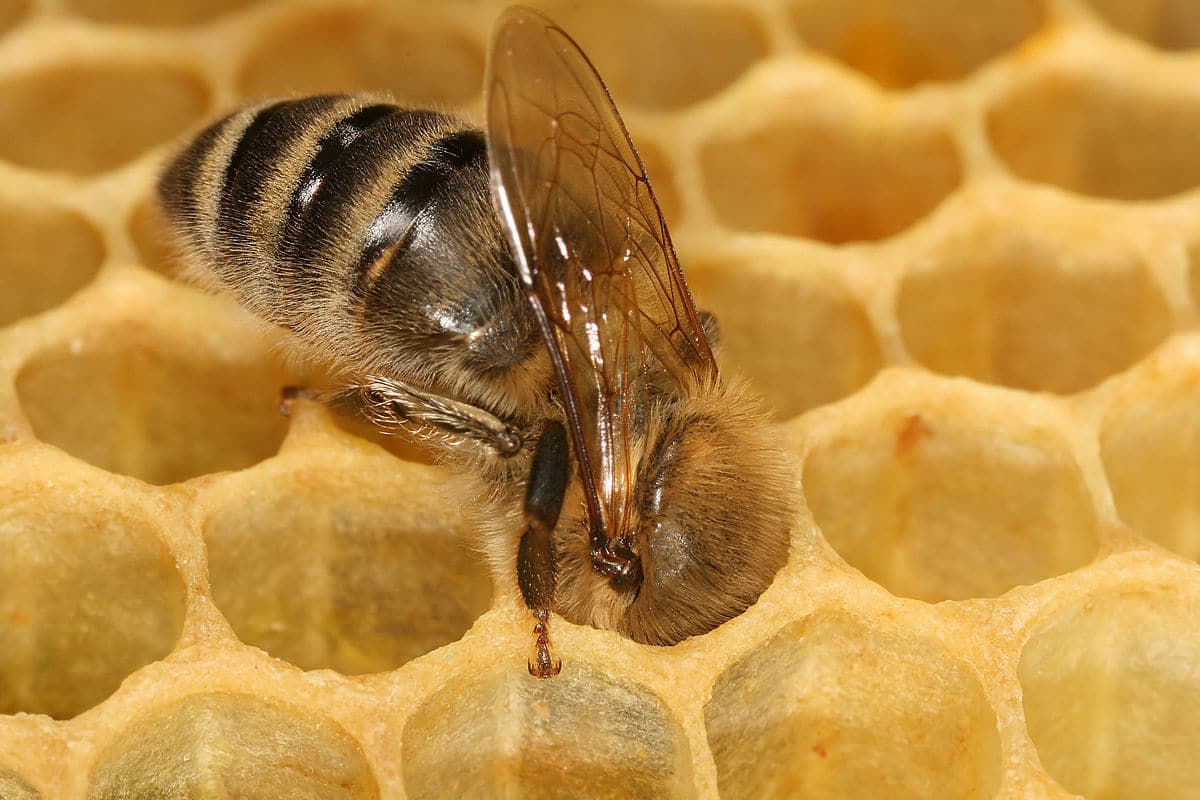
Bees feed on honey just like we eat food. They need it to provide them with the energy needed to carry out their daily tasks, such as flying from flower to flower to collect nectar and pollen, building their hives, and taking care of their young.
Bees feeding on honey. Credit: Wikimedia/Richard Bartz
What else do bees eat?
In addition to nectar, bees also consume pollen. Pollen is a powdery substance that covers the reproductive parts of flowers and is collected by bees when they visit flowers. Pollen is a rich source of protein and other nutrients that are essential for bee development and growth.
When bees collect pollen, they pack it into special baskets on their hind legs, called corbiculae . When they return to the hive, they transfer the pollen to the worker bees, who store it in the comb. Pollen is used as food for the colony’s young, called larvae , which are fed a mixture of pollen and nectar called bee bread.
Bees also drink water to help them regulate their body temperature and hydrate their bodies. On hot days, bees use their wings to fan the hive and cool it down. They also use water to dilute honey and make it easier for the colony to consume. Water is also used to clean the hive and keep it free of dirt.
Finally, bees also feed on royal jelly, which is a special secretion produced by worker bees. Royal jelly is fed to the queen bee and the developing larvae and is believed to play an important role in the development and health of the colony. Royal jelly is rich in vitamins, minerals, and amino acids, which help the queen bee lay eggs and maintain her health.
The diet of bees is crucial for their survival and their ability to carry out their important role in the ecosystem. Bees play a vital role in pollinating flowers and plants, which helps to produce the fruits, vegetables, and nuts that we eat. Without bees, our food sources would be severely impacted, and many plants would become extinct. So the next time you see a bee buzzing from flower to flower, you’ll know they’re not just collecting nectar, they’re also collecting a balanced diet that helps keep the world’s ecosystems healthy and thriving.
Are honeybees the only creatures that make and consume honey?
Other insects, like wasps and ants, also make honey. They do this by collecting nectar and storing it in their nests. However, unlike honeybees, these insects do not have the special enzymes needed to break down the nectar into simple sugars. As a result, their honey is not as sweet or as easily digested as the honey produced by honeybees.
Many animals, including birds, bats, and bears, love to eat honey. They are attracted to the sweet taste and the energy it provides. Honey is a good source of carbohydrates , which gives animals the energy they need to survive.
One of the most famous honey-loving animals is the bear. Bears try to raid beehives and eat all the honey they can find. They have a very keen sense of smell and can sniff out a beehive from far away. They then use their strong claws to break open the hive and consume the honey.
Birds, such as the hummingbird, also enjoy honey. They feed on nectar from flowers, but will also eat honey if they can find it. Bats also like to eat honey, especially during the winter months when their usual food sources are scarce.
So, why do animals like honey so much? As we mentioned before, honey is a good source of energy. It is also rich in vitamins and minerals, which helps to keep animals healthy. Additionally, honey is very easy to digest, which means that animals can quickly get the energy they need from it.
In conclusion, bees do indeed eat honey. They collect nectar from flowers and transform it into honey, which is stored in the comb and used as food for the colony. Honey is an important source of energy and nutrition for honeybees, helping them to survive and thrive in their natural habitats. So, the next time you see a busy bee collecting nectar, remember that it’s all part of a complex and fascinating process that allows the colony to thrive!
Glossary
Glucose and fructose: Types of simple sugars.
Evaporation: A process in which a liquid turns into a gas or vapor, usually as a result of heating.
Carbohydrates: A type of organic molecule composed of carbon, hydrogen, and oxygen.
Larvae: Tiny, worm-like creatures that are the early stage of growth for many insects.
Enzymes: Special proteins that help chemical reactions happen, such as making it easier to break down substances.
Corbiculae: The “pollen baskets” of bees; structures on their legs that they use to carry pollen.