Many people think snow is one of the best parts of winter. It gives us the chance to ski and sled, or even have the occasional snowball fight.
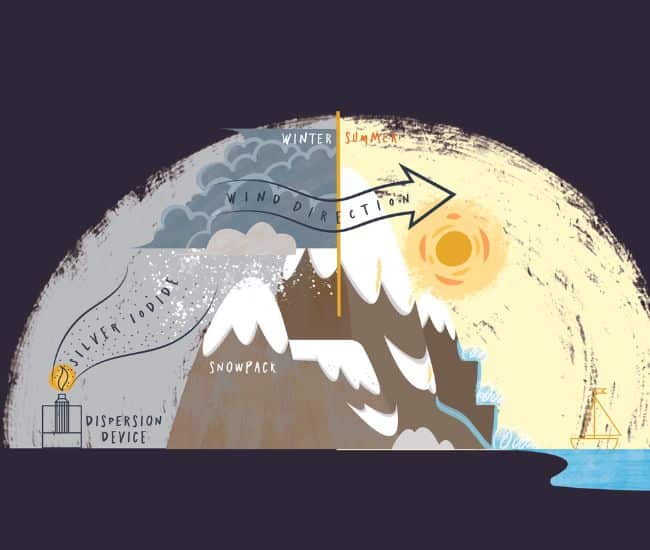
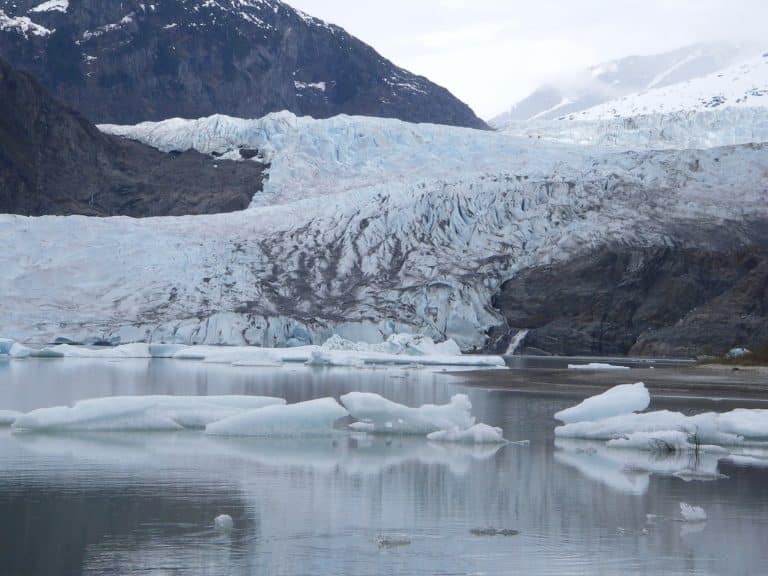
But snow around the world can be a source of more than just fun – it can be the primary source of water. Think of mountain snowpacks like giant water towers. Snow collects in mountain environments during the wet winter season. Then, as temperatures rise during the drier spring and summer seasons, the snow melts and slowly releases water into rivers. From there, the water can be used for drinking and for irrigating crops.
The western US provides an important example of this kind of water tower. Much of California’s landscape is dry year-round, but the high Sierra Nevada mountains can collect more than 50 feet of snow during the winter. The snowpack then slowly melts throughout the spring, summer, and fall. The water makes its way downhill towards major cities like Los Angeles and San Francisco. All told, snowmelt provides 30 percent of the state’s water.
But this slow, stable release of water throughout the year is threatened by climate change. Scientific studies suggest that winters are going to get warmer, both in the western US and in dry regions around the world. So even if the amount of precipitation in the mountains stays the same, more of it will fall as rain instead of snow.
As a result, water will be released into rivers much more rapidly during the winter, and the snowpack will be much smaller at the end of winter. By late summer, the snowpack could be gone entirely – leaving people living in dry lowlands without a reliable source of water until the next winter.
But what if we could make it snow in the mountains, even when temperatures stayed above freezing? That’s the idea behind cloud seeding.
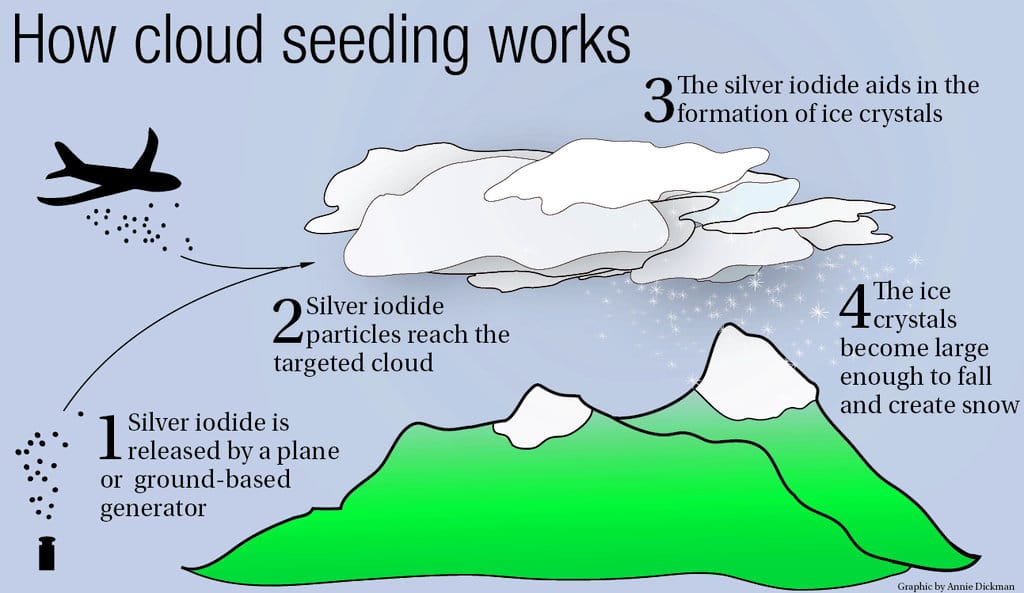
Credit: Annie Dickman
Cloud seeding involves spraying particles of silver iodide from a plane as it passes through a cloud. The silver iodide encourages water droplets to form ice crystals inside the cloud, which can then grow into full-fledged snowflakes. Simply adding silver iodide lets snowflakes form ~10 degrees warmer than they normally would. Theoretically, snow could continue to fall in the mountains even as winters get warmer.
While this might seem like a simple solution to the world’s snowpack problem, cloud seeding hasn’t been taken seriously since the idea was first proposed in the 1940s. Over the past 70 years, no one has been able to prove that cloud seeding actually increases the amount of snow falling from a cloud.
That has now changed. Last year a study documented the first evidence of snow forming in a seeded cloud. Researchers used a radar system mounted on an airplane flying through a cloud to capture the process in action. Cloud seeding can create snow from clouds that would otherwise yield rain!
The finding is already pushing many dry states in the western US to test cloud seeding. Colorado, Nevada, Wyoming, Idaho, and Utah each tested state-wide cloud seeding programs to try to increase the depth of their mountain snowpacks last winter. Four more states are working on smaller cloud seeding projects that could grow in coming years.
Still, cloud seeding has a long way to go before it becomes normal around the world. Flying planes into clouds one at a time or shooting silver iodide particles from a mountaintop is expensive. There are also concerns about how cloud seeding could reduce the amount of rain that falls on the other side of mountain ranges – cloud seeding could relieve one region’s thirst, while leaving another dry.
However, with evidence in hand that cloud seeding can work, it’s likely that the technique will only become more popular as winters warm. Cloud seeding may not be perfect, but it has a lot of potential for maintaining mountain snowpacks and summertime water supplies in dry parts of the world.
Glossary
Climate change – A gradual warming trend and shift in precipitation patterns around the world.
Cloud seeding – Technique for artificially encouraging clouds to drop their moisture as snow.
Precipitation – Rain, snow, hail, and other forms of water falling from clouds.
Silver iodide – A powdery substance used in cloud seeding to encourage water to form ice crystals.
Snowpack – Snow that accumulates over the course of an entire winter.
Michael Graw is a freelance journalist and photographer based in Bellingham, Washington. He holds a PhD in oceanography from Oregon State University. Michael is excited about making scientific research easier to understand and sharing the stories behind the science. When not writing, you can find him climbing, skiing, and trail running.
Writing for Smore gives Michael an opportunity to share the most exciting new developments in science today with tomorrow's scientists.