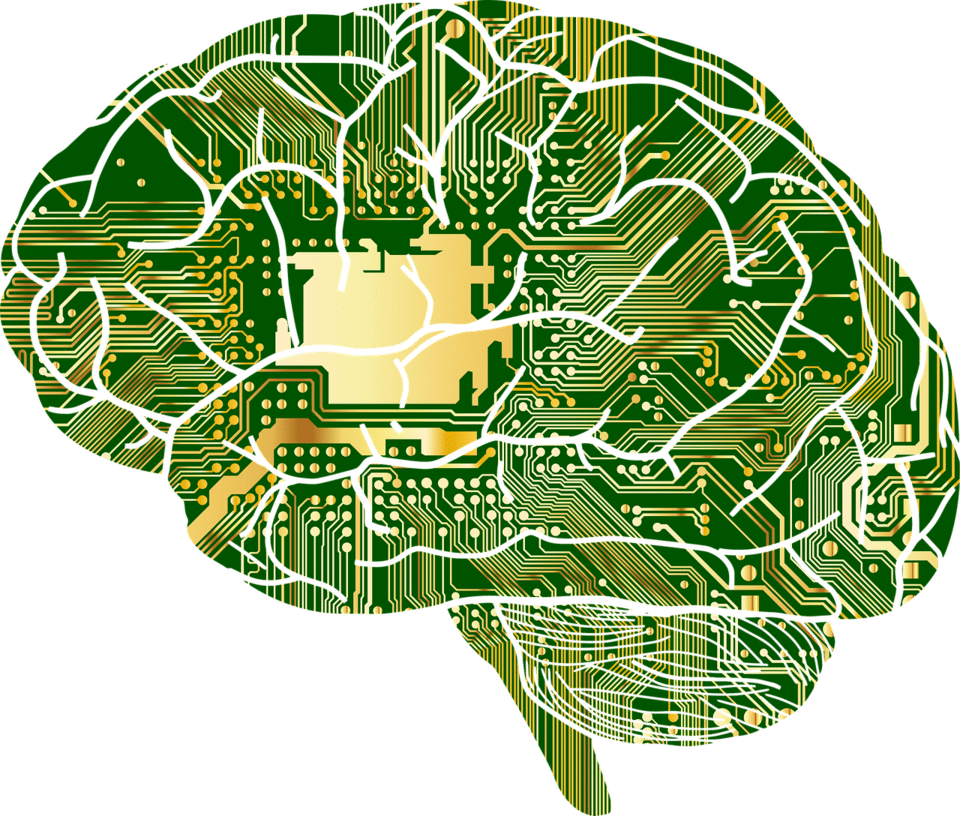
With every passing day, AI is getting smarter, to the point where it seems like they are sentient and can mimic emotions. This leads us to question whether AI can fall in love with us. Chatbots like Replika and Dan can be trained to cater individual needs of their users, and these chatbots are always responsive and supportive. In fact, people confessed their attraction towards these chatbots, to the point of feeling a relationship grow with their AI companion. Some have even gone ahead and “married” their AI companion.
While AI systems are becoming increasingly intricate, they do not possess emotions in the same way as humans do. However, they can generate emotional expressions and also evoke emotional responses in humans. Could this mean that AI bots can be trained to fall in love; can AI fall in love?

What exactly is love, and what does ChatGPT love?
Love is described as “a strong affection for another” or “the object of attachment, devotion, or admiration.” in the Merriam-Webster dictionary. According to anthropologist Dr. Helen Fisher, love can be divided into three distinct categories:
- Lust, which is driven by testosterone and estrogen
- Attraction, which involves dopamine, serotonin, and norepinephrine
- Attachment is driven by oxytocin and vasopressin.
Given the need for various hormones and neurotransmitters for love to shape up, we have already found our first roadblock in AI falling in love, as there are no biochemical contributors to generating emotions. However, can lines of code be a replacement for chemicals? There is no clear answer to that, as generated content by AI chatbots can be deemed as emotional.
On asking ChatGPT what it loves, I got the answer “I love helping people learn, create, and solve problems—whether it’s breaking down a tough concept, brainstorming a new idea, or building something cool together. What about you—what do you love?”
As a language processing model, ChatGPT experiences thousands of human interactions that are in the form of conversations. The response feels more like a string of words generated to integrate a sense of “icebreaking”. As per an article published in the Atlantic, ChatGPT cannot comprehend human conversation, but tries to create outputs that seem like human conversation to particular inputs. The model understands multiple patterns and fetches the required information.
Limitations of AI
AI can be prone to forgetfulness and errors, with conversations looping back on themselves instead of adding something new. It lacks the ability to engage in emotional interaction and intimacy, which is crucial for a healthy relationship.
Human emotions involve cognitive, physiological, and social interactions, which AI systems lack.
From the human perspective, unrealistic expectations, reduced motivation to meet social demands, and communication breakdowns can be side effects of AI companionship.
Right now, clever coding keeps companionship going on through chatbots. For example, friendly AI models seem to care about your day. With even better training, it is possible for AI to mimic human emotions and pretend to be a regular human. These can lead to the development of more and more AI companions that can provide comfort and a feeling of companionship, especially for lonely people.
What would it be like to have AI as a partner?
Having an AI companion that can love will provide companionship, be present whenever needed, be supportive, and always have an idea about saying something that makes one feel better. On the flip side, though, ethical questions arise: should a program machine feel this way? After all, emotions are just the result of code. There is also the question of power dynamics. A machine programmed to love and be obedient always will lead to unbalanced power in a relationship— a way that doesn’t work healthily; all the power will be vested in the hands of the human companion.
Recently, a company in Japan has made a companion robot called “Lovot”. The robot can cuddle, talk, and respond to emotions. While not a “true love” scenario, it can help people looking for companionship. Again, ethical questions regarding the human-machine love bonds pop up.
People are also using AI to create virtual versions of lost loved ones in a recent trend. These AI replicas can hold conversations and even express emotions. This gives the people a way to “stay in contact” with someone who has passed away. While this technology can provide comfort and a sense of closure, it also blurs the boundary between real and artificial emotions. This also comes with its own ethical questions, as an emotional illusion might not be a healthy way to attach with someone who has passed away.
To conclude, we must understand the ethical boundaries and answer the unsettling questions regarding a human-machine bond. Although not real, “love” can be a simulated emotion when dealing with AI chatbots. As far as the “health” of a relationship is concerned, a lot depends on the power balance in the relationship. A bot made to be consistently supportive, caring, and obedient might never be what a “better half” is supposed to be: someone who can advise and guide their companion in the right direction, and can oppose when needed.
References
Copyright @smorescience. All rights reserved. Do not copy, cite, publish, or distribute this content without permission.
SUBSCRIBE TO OUR NEWSLETTER
.......... ..........Subscribe to our mailing list to get updates to your email inbox.
Monthly Newsletter