Fractals in Nature
Table of Contents
Learn about the surprising mix of math and nature
A fractal is nothing but an infinitely repeating pattern. Imagine a triangle. Each triangle is part of a larger triangle which is part of a larger triangle… and so on. A fractal pattern is made up of these smaller patterns, each of which is identical or at least similar to the others! This crucial property is known as self-similarity .

Notice how each larger triangle is made up of smaller triangles. Although the triangle itself is simple, the patterns it makes just by being repeated can be very complex. Fractals can be quite beautiful.
What are examples of fractals in nature?
On the surface, math and nature seem like opposites. Nature is wild and unpredictable, creating surprising shapes and forms. On the other hand, one math equation always makes a predictable answer.
Romanesco broccoli

Romanesco broccoli is a cross between broccoli and cauliflower. What do this good-looking vegetable and the human heart have in common? Both of them are perfected by the golden ratio . The buds on this veggie grow faster in a spiral. As the broccoli grows taller, it forms a conical shape.
Lightning

Lightning is one event in which electricity passes across an insulator . Air doesn’t conduct electricity well, and this causes a powerful display of fractals, in the form of lightning. Wonder how lightning forms branches? Lightning superheats air when it passes through the atmosphere. This changes how electricity interacts with air, and as it finds the paths that are most conductive it forms the branches of lightning.
Crystals

Apart from being beautiful, some mineral crystals also form fractals. The size of the portion that forms fractals depends on how the crystal formed in the first place. Crystals like amethyst have a cubic formation.
Pine cones

Pine cones bear seeds, and their cones form a spiral pattern due to a fast growth rate. The cones are tightly closed when the temperature is low or it is damp outside. When it gets warmer the cones open to expose the seeds, which then get carried to other places on the wind.
What are the four types of fractals?
The most common kind of fractal found in nature is known as complexity from simplicity This is the quintessential fractal. With a simple set of rules and guidelines, you can generate a complex fractal yourself. One example is the triangle we looked at earlier. In the Koch snowflake below, the only guideline is to overlay one triangle with another.

The second kind of fractal is the most dizzying. It is known as the infinite intricacy fractal. No matter how much you zoom in, it never gets simple. This is why the intricacy is described as infinite! It’s difficult to imagine an equation or pattern that is so complex. Consequently, the first example of this fractal was only found in 1872, described by mathematician Karl Weierstrass. Weierstrass’ fractal was a zigzag where each zag was made up of corners. No matter how you twisted, turned, zoomed in, or zoomed out, the zag just could not be broken down to simpler components.

A zoom symmetry fractal is almost the opposite of an infinite intricacy fractal. Each tiny bit of the fractal is a reflection of the whole! Another key property of this kind of fractal is its ability to be transformed—or, more accurately, its inability to be transformed. Imagine a square. If you tip the square on its side and rotate it 90 degrees, you end up with something that looks exactly the same. Each component of this fractal, when transformed, creates the same fractal. These fractals were discovered relatively late, in the 1970s, by Polish mathematician Mandelbröt.
The last feature of a fractal is its odd dimensional nature. You’re probably reading these words on some kind of screen. The words themselves are one dimensional. The device is likely three dimensional, with a length, breadth, and width. Fractals occupy a weird dimensional space. They typically lie somewhere between the second and third dimension.
Are fractals important in nature?
Fractals are very important in nature! A fractal pattern allows things in nature to pack far more than they should. For example, the branching of vessels in the lungs follows a fractal pattern. Though they fill only the space in your chest, the unraveled surface area would be more than 70 square meters (700 square feet)!
Using fractal logic also helps us understand the natural world. If a whole can be broken down into its parts, each of which is described by the same mathematical equation, we can simplify and comprehend otherwise complex systems.
What are the five patterns in nature?
The key underlying mechanism of most patterns in nature is self-organization . Each unit knows what to do, so a pattern emerges overall!
There is a bit of back-and-forth about exactly how many patterns are observed in nature, but the most common five seem to be spiral, meander, explosion, packing, and branching.
Branching is exactly what nerves and trees do! Packing is similar to the beehive example, where nature tries to fit as much as possible into as little space as possible.

Fractal find: Find other fractals with branches. One of them has also been mentioned in the article earlier. Do you know which one?
A honeybee hive is actually a regular pattern of hexagons, made by almost identical worker bees! Packing is similar to the beehive example, where nature tries to fit as much as possible into as little space as possible. But most things in nature are made up of identical, smaller parts.

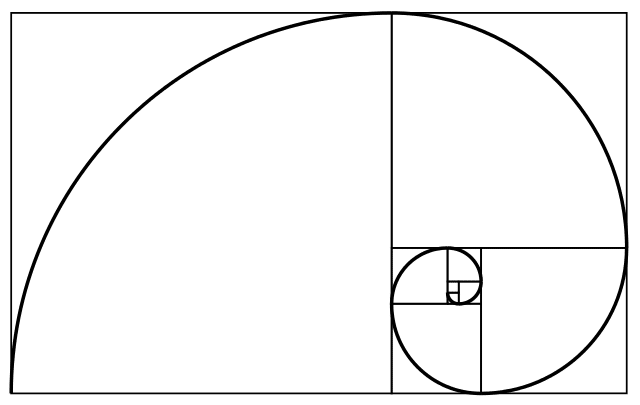
Spirals seem to be very common for organisms that grow throughout their lives, like certain molluscs and plants. Physicists think this is because spirals are one of the lowest-energy arrangements.
Read more: Golden ration in the human body

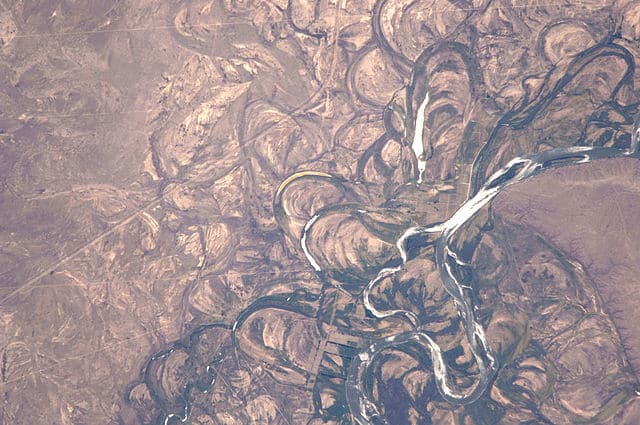
Meanders describes the movement of things like rivers and coastlines. As two opposing forces like water and rock interact, they push and pull each other in different directions.
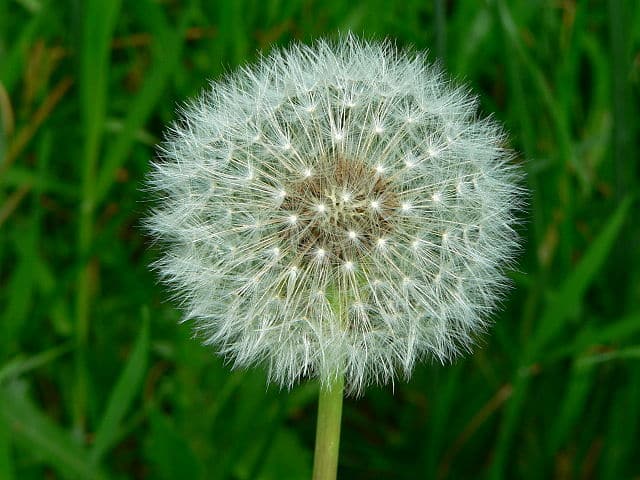
Explosions are pretty dramatic! Typically, they have a high energy or high density center, from which things originate.
Patterns unfold around us in nature. The reasons for them are varied, from the most energy-efficient layout to the ability to self organize. What patterns do you see around you?
In a study at the University of Oregon, it was suggested that seeing fractals can help reduce stress. Why wait? Take a stroll and find fractals that appear in nature.
Hands-On Science
Draw your own fractal:
Step 1:
Draw an equilateral triangle, that is, all three sides are of the same length. For ease of measurement, draw a triangle with sides of 3 cm (1.2 inches)
Step 2:
Divide each side into three equal parts, which makes every part have a length of 1 cm (0.4 inches)
Step 3:
Measure the length of the middle portion. Draw an equilateral triangle with sides equalling this length, on the middle portion, on each of the three sides.
Step 4:
Divide each outer side of the new triangles into thirds. Draw equilateral triangles on these middle portions.
Step 5:
Divide the other portions on the sides of the main triangle into thirds. Draw equilateral triangles from those as well.
Step 6:
Repeat the process. In the end, you will get a fractal pattern that is called the Koch curve. Try working with larger triangle sides for even more repetitions.
Glossary
Complexity from simplicity: A complex arrangement arising from simple components
Infinite intricacy: A fractal that is very complex regardless of scale
Self-organization: The property that each unit behaves independently
Self-similarity: Each component is made of smaller, identical components
Golden ratio: A ratio that defines perfection. If proportions meet this ratio, then that is believed to describe what looks the best or is most appealing.
Insulator: Materials through which electricity cannot pass easily.
Flesch Kincaid Grade Level: 7.9
Flesch Kincaid Reading Ease: 56.7
References
https://physicsworld.com/a/fractal-like-honeycombs-take-the-strain/
https://scholar.rose-hulman.edu/cgi/viewcontent.cgi?article=1217&context=rhumj
https://aapt.scitation.org/doi/10.1119/1.13295
https://www.sciencedirect.com/topics/engineering/fractal-dimension
https://www.ncbi.nlm.nih.gov/pmc/articles/PMC9202574/
https://journals.aps.org/prl/abstract/10.1103/PhysRevLett.68.2098
https://books.google.co.in/books/about/Patterns_in_Nature.html?id=dxvyHAAACAAJ&redir_esc=y